According to the National Private Truck Council (NPTC)1, over 200,000 companies in the U.S. operate private fleets. In Europe, nearly two out of three new cars are sold to corporate enterprises, and are used mostly for corporate car pools or corporate fleets. With the rising costs of vehicles, maintenance, insurance and more, owning and operating a private fleet can be an expensive task which is why many companies choose to outsource their fleets to third parties. Either way, the bottom line is the same – companies need efficient fleet management with maximum asset utilization, and the best way to ensure this is an excellent fleet tracking system.
Managing any size or type of fleet is a challenge. Company fleets invariably include a sizable number of vehicles that travel across a large geographical area, often carrying sensitive materials or goods. Fleet managers or anyone else who has a stake in the manner in which the fleet is managed , have many concerns – they are looking to lower costs and meet KPIs, while ensuring that the goods get to their destination – on time and in perfect condition. They want to protect the drivers’ personal safety, while managing them with maximum efficiency. And they have to deal with vehicles being stolen or having technical faults.
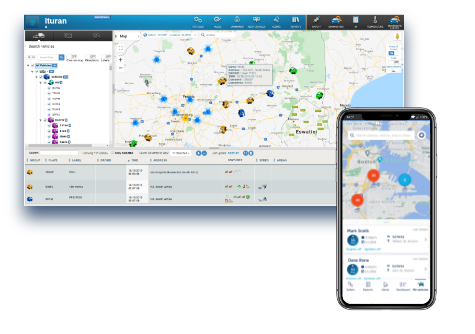 The benefits of an excellent fleet tracking system are many – it allows companies to maximize utilization of fleet vehicles, cut overhead expenses such as fuel, vehicle maintenance insurance costs, optimize employee performance, encourage safe driving, and much more.
A fleet management system that provides a solution to all these issues must support fleet telematics and GPS fleet tracking and must be able to do the following:

Real-time fleet tracking
It must be able to track and report on vehicle location and status, in real time. In order to be able to manage your fleet with utmost efficiency, you need to know exactly where each one of the vehicles is at any given time and its status at that time.
GPS fleet tracking provides this data so you can streamline your operations and be alerted when a vehicle may be stolen (for example, when it’s not where and when it should be). Having all the information at hand in a web-based SaaS platform and/or app with push notifications/email/text alerts is important for viewing the real time status 24/7, from any location.

Fleet policy/ rules can be applied
Fleet policy/rules must be configurable and you should be alerted any time the rules you establish are disrupted.
You must be able to set your own fleet policies – permitted operating times, locations (Geo-fencing), speed limits, prolonged idle times. You should also be able to configure the alerts you receive any time irregular vehicle activity is detected. This will ensure efficient, safe operations, and let you know in case of suspected vehicle theft or accidents.

Fleet reports and analytics
It should have a reports and analytics module. As a fleet manager you should be able to receive reports on fleet performance on a regular basis and you should be able to define the types of reports that are received, who receives them (fleet manager, driver, company owner, etc.), when they are received, and how (app/desktop/text message, etc.). For example, you may want to receive a report every morning on which vehicles never left your parking area the previous day, which vehicles were driven with excessive speed, etc. Make sure your reporting system also provides analytics, such as activity within the fleet’s predefined working hours and after working hours – insights to help make data supported business decisions, and help meet your KPIs.

Remote fleet tracking and control
It should enable controlling fleet vehicles remotely.
A good fleet tracking system should provide the ability to control your fleet remotely. This can come in handy in many cases, for example you may want to remotely open or close vehicle doors, disable driver ID mechanisms – for drivers who have forgotten the code, deactivate vehicle use, protect the vehicle code when it goes into the auto repair shop for maintenance, and more.

Fleet GPS tracking – in pre-defined locations
It should enable monitoring vehicle behavior in specific, pre-defined locations. You may want to track vehicle activity in a specific location – such as within your campus, customer sites or logistic centers. A GPS tracking system should enable the definition of a specific geo-location in which to track vehicle activity, which will help you understand if your vehicles are utilized in the most efficient way. One example is – data on how much time passes between the time a truck enters the logistic center and the time it leaves.
Easy fleet driver management
You should be able to manage and track all of your drivers.
A fleet tracking system should provide an easy intuitive interface for managing your drivers – add or remove drivers, manager their work schedules, block inactive drivers and always know which driver is using which vehicle, when, and where.

Fleet drivers safety protection
Safety first! Safer drivers are better employees, and involved in fewer accidents. And fewer accidents mean lower maintenance, fuel and insurance costs as well as less down time for your vehicles. A good fleet management system enhances driver safety by monitoring driving activity and providing direct feedback and training to drivers on how to avoid dangerous driving behavior, such as braking or speeding, and to fleet managers who can analyze driver behavior and identify drivers who take risks more often. In the event of an accident, it is obviously vital that the fleet manager receive real time alerts so that he can provide assistance as quickly as possible, but in the longer run these alerts also provide the ability to investigate the incident and draw conclusions for more efficient and secure future conduct.

Fleet vehicles maintenance schedule management
It should help you manage vehicle maintenance schedules.
A successful fleet monitoring system should include a vehicle maintenance module for managing all routine vehicle servicing – whether the schedule is based on time (e.g. annual maintenance), distance or actual operational driving time. This will ensure that fleet vehicles are maintained on time, and are therefore safer, perform better and last longer – all of which lead to fleet cost effectiveness.

Real-time fleet health reporting
Real time vehicle health reporting – diagnostics. An advanced fleet tracking solution should monitor the mechanical status of your vehicles on a regular basis – engine temperature, oil pressure etc. and provide diagnostic alerts that will help you discover technical faults before it is too late.

Customizable – per industry
It should be able to provide tailor made solutions for different industries. Different fleets have different needs, and the ideal system should be customizable. For example, fleets that are used for transporting sensitive goods require the ability to monitor the temps of sensitive goods in storage and during transport (Reefer monitoring). To answer that need, the ideal fleet tracking system should be able to measure deviations from the temperatures that you define and send alerts when these deviations occur.
Last but not least – your fleet tracking system should be able to interface with all your other systems!
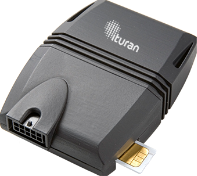
It is important that the fleet tracking system should be capable of interfacing with your existing systems via an API, that will enable extracting data such as location, driver identification, etc., and implementing it into external systems such as route scheduling systems, financial systems and more.
Conclusion
A fleet tracking system that features all these qualities is essential for maximizing fleet productivity, ensuring that the goods are transferred properly and arrive intact, reducing overhead expenses, optimizing employee performance, promoting safe driving, and much more. You must also make sure your fleet tracking system is scalable and able to handle your fleet as it grows, that it is compatible with most vehicle types and worldwide safety standards, and that it integrates easily with any software or apps you already have.


 Follow Us
 Follow Us
 IS
IS US
US BR
BR MX
MX AR
AR