After months under restrictions, we are slowly getting used to a new kind of normal. How have things have changed, and what new models can help us be better prepared for the future?
In this post we’ll discuss how COVID-19 changed the way we look at car insurance
Beginning in early March 2020, most of the world was put in lockdown; people were instructed to stay at home, streets were almost empty, and most of us used our cars only on rare occasions.
Car insurance companies in the US, and in other places in the world, have realized the problematic outcome of this, and are offering a compensation in the form of refunds and discount rates, in an attempt to retain customers. With that, it is clear that these are only temporary solutions, and there is a need for a structural change.
Car usage has radically changed in the months that passed since the “first wave”. According to data collected by Ituran in our countries of operation, we see:

It is unclear how these will affect the number of cars on the road, or trips and kilometers driven in the long run, but it would be safe to assume that our daily commute, and traveling habits will not go back to pre COVID-19
We expect to see the following post COVID-19 trends:
- Work from home in some way or another will become part of the standard
- Fewer commuters will use public transportation and carpooling because of social distancing
- There will be less international travel, more domestic travel and more cars on the road
- We’ll see a continuous surge in online shopping, also for basic needs such as food
A post COVID-19 world, when consumers are more aware of expenses, makes a good case for wide implementation of usage-based insurance (UBI) solutions, where the insurance package for each customer is determined by:
- Pay As You Drive (PAYD)- Based on the vehicle usage
- Pay How You Drive (PHYD)- Based on a customer driving behavior
While PAYD is based on how much people use their vehicle, PHYD also encourages better driving habits and takes these into account when calculating premiums, giving customers an extra incentive to pay attention to even the smallest speeding violations. PHYD software monitors everything from speeding, sudden breaking and acceleration, to sharp turns, dangerous overtaking and more.

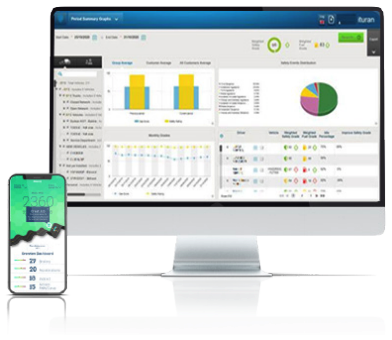
Today, technology helps us collect ongoing usage and driver behavior data, via tracking systems installed in vehicles. This in turn enables us to implement UBI solutions, which link insurance premiums to actual driver/vehicle performance. This allows insurers to calculate premiums more accurately, and offer more affordable insurance policies to lower-risk drivers. It also gives consumers the ability to control their premium costs by motivating them to monitor car usage, and drive more safely, protecting us all from dealing with unnecessary and unjustified expenses in extreme situations like we have experienced since the COVID-19 outbreak.
Recognizing the benefits of UBI, a growing number of insurance providers are adapting the use of telematics technology to offer new insurance policies and promote safer and better driving. Since the first COVID-19 wave , Ituran has experienced a surge in the UBI category, with more and more insurance providers implementing our solutions.


 Follow Us
 Follow Us
 IS
IS US
US BR
BR MX
MX AR
AR